Introduction

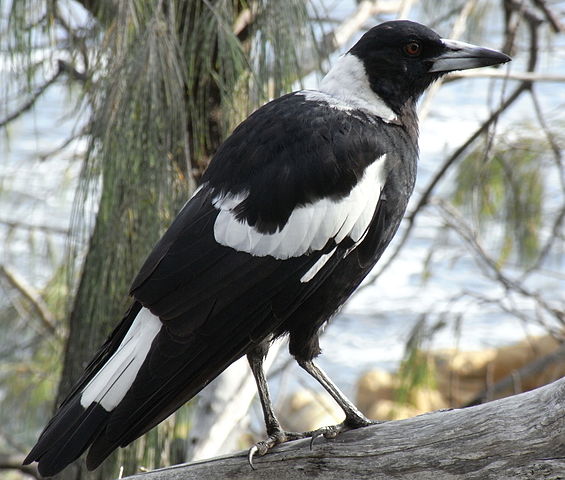
Gymnorhina tibicen, Australian Magpie
This is an activity that can take all day but should be limited to about 20 minutes for young children and teenagers. It is suitable for groups of people older than about 6 years of age (maximum 30).
Materials
Optional (depending on expertise): Fullagar, P. and Slater, E. 2004. CD: Field Guide to the Birds of the ACT: The Calls and Songs Compiled and Edited, and battery-operated portable CD player that can select tracks on request.
Optional: pictures of commonly seen birds tagged in a Field Guide or pasted onto cardboard cards.
Preparation
The leader of this activity should familiarise themselves with the calls of birds commonly seen in the Aranda Bushland, and how to locate them readily on the Fullagar and Slater CD.
Birdsongs of some commonly seen birds in Aranda Bushland
To hear the bird’s call, click the arrow on the right of the bar. Adjust the volume by clicking on the loudspeaker symbol on the left.

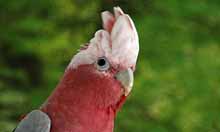
Cacatua roseicapilla
Cacatua roseicapilla, Galah
Audio clip: Adobe Flash Player (version 9 or above) is required to play this audio clip. Download the latest version here. You also need to have JavaScript enabled in your browser.

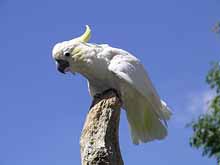
Cacatua galerita
Cacatua galerita, Sulphur-crested Cockatoo
Audio clip: Adobe Flash Player (version 9 or above) is required to play this audio clip. Download the latest version here. You also need to have JavaScript enabled in your browser.

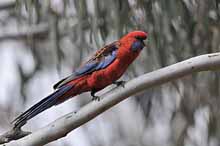
Platycercus elegans
Platycercus elegans, Crimson Rosella
Audio clip: Adobe Flash Player (version 9 or above) is required to play this audio clip. Download the latest version here. You also need to have JavaScript enabled in your browser.

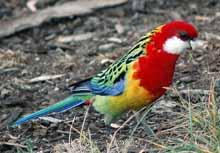
Platycercus eximius
Platycercus eximius, Eastern Rosella
Audio clip: Adobe Flash Player (version 9 or above) is required to play this audio clip. Download the latest version here. You also need to have JavaScript enabled in your browser.

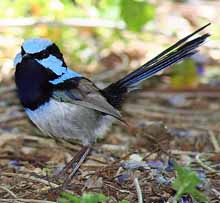
Malurus cyaneus
Malurus cyaneus, Superb Fairy-wren
Audio clip: Adobe Flash Player (version 9 or above) is required to play this audio clip. Download the latest version here. You also need to have JavaScript enabled in your browser.

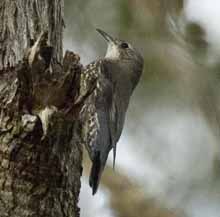
Cormobates leucophaea
Cormobates leucophaea, White-throated Treecreeper
Audio clip: Adobe Flash Player (version 9 or above) is required to play this audio clip. Download the latest version here. You also need to have JavaScript enabled in your browser.

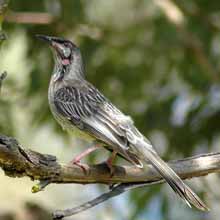
Anthochaera carunculata
Anthochaera carunculata, Red Wattlebird
Audio clip: Adobe Flash Player (version 9 or above) is required to play this audio clip. Download the latest version here. You also need to have JavaScript enabled in your browser.

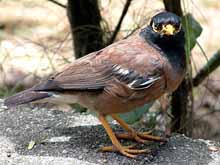
Acridotheres tristis
Acridotheres tristis, Indian Myna
Audio clip: Adobe Flash Player (version 9 or above) is required to play this audio clip. Download the latest version here. You also need to have JavaScript enabled in your browser.

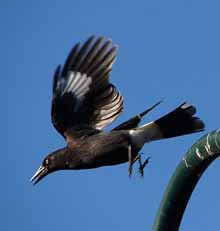
Gymnorhina tibicen
Gymnorhina tibicen, Australian Magpie
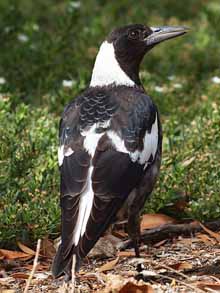
Audio clip: Adobe Flash Player (version 9 or above) is required to play this audio clip. Download the latest version here. You also need to have JavaScript enabled in your browser.

Strepera graculina
Strepera graculina, Pied Currawong
Audio clip: Adobe Flash Player (version 9 or above) is required to play this audio clip. Download the latest version here. You also need to have JavaScript enabled in your browser.

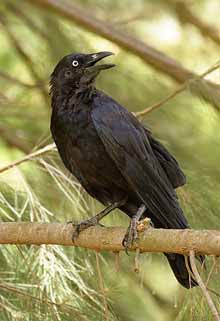
Corvus coronoides
Corvus coronoides, Australian Raven
Audio clip: Adobe Flash Player (version 9 or above) is required to play this audio clip. Download the latest version here. You also need to have JavaScript enabled in your browser.
Birdsongs of some birds not so commonly seen but easily recognised

Calyptorhynchus funereus
Calyptorhynchus funereus, Yellow-tailed Black-Cockatoo
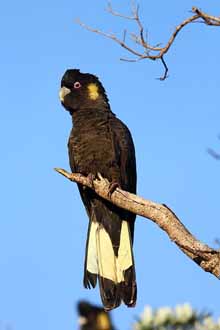
Audio clip: Adobe Flash Player (version 9 or above) is required to play this audio clip. Download the latest version here. You also need to have JavaScript enabled in your browser.

Dacelo novaeguineae
Dacelo novaeguineae, Laughing Kookaburra
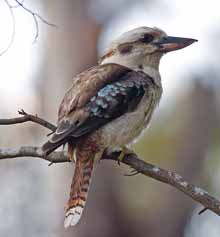
Audio clip: Adobe Flash Player (version 9 or above) is required to play this audio clip. Download the latest version here. You also need to have JavaScript enabled in your browser.

Pardalotus punctatus
Pardalotus punctatus, Spotted Pardalote
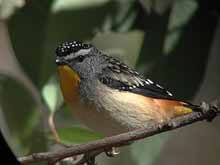
Audio clip: Adobe Flash Player (version 9 or above) is required to play this audio clip. Download the latest version here. You also need to have JavaScript enabled in your browser.

Sericornis frontalis
Sericornis frontalis, White-browed Scrubwren
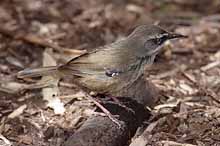
Audio clip: Adobe Flash Player (version 9 or above) is required to play this audio clip. Download the latest version here. You also need to have JavaScript enabled in your browser.

Philemon corniculatus
Philemon corniculatus, Noisy Friarbird
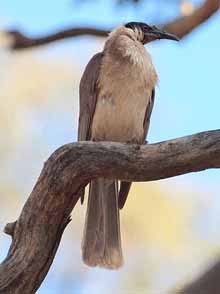
Audio clip: Adobe Flash Player (version 9 or above) is required to play this audio clip. Download the latest version here. You also need to have JavaScript enabled in your browser.

Acanthorhynchus tenuirostris
Acanthorhynchus tenuirostris, Eastern Spinebill
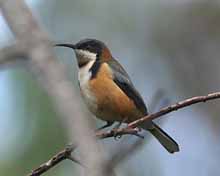
Audio clip: Adobe Flash Player (version 9 or above) is required to play this audio clip. Download the latest version here. You also need to have JavaScript enabled in your browser.

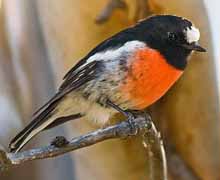
Scarlet Robin
Petroica multicolor, Scarlet Robin
Audio clip: Adobe Flash Player (version 9 or above) is required to play this audio clip. Download the latest version here. You also need to have JavaScript enabled in your browser.
We also have a checklist of birds seen in the Aranda Bushland.
On site
Stop at various spots along to the Frost Hollow to Forest Walk to listen for bird calls. Participants should stand or sit quietly without damaging plants and away from ants’ nests, listening carefully. If a bird call is heard, the participants should point in the direction of the call and see if they can see the bird. When the call stops, or if there is a break in the call, ask the participants if they can identify the bird or birds. If you can, play the relevant track from the CD to aid identification. You may wish to hold up a picture of the relevant bird heard or seen.
Specific activity for autumn
Look out for the significant flocks of Yellow-faced Honeyeaters (Lichenostomus chrysops) and the White-naped Honeyeaters (Melithreptus lunatus) which fly from the Brindabellas towards the coast in autumn, usually from late March to late May, especially on sunny mornings between 8.00am and 11.00am.
The Canberra Ornithologists Group
Visit their website to learn about the group and to see pictures taken by members of the group.
With thanks for Sue Robertson of the Canberra Ornithologists’ Society for compiling the bird lists, and Peter Fullagar & Eric Slater the Canberra Ornithologists’ Society for allowing the calls from their CD to be used on this site.
Back to the main page of For Schools